Ongoing Projects
The projects below reflect my research agenda on the relationships between academic research, collaboration, knowledge production, and industrial innovation. My work examines how research activity and collaboration networks shape innovation outcomes across different contexts. Methodologically, I combine bibliometric analysis, econometrics, spatial econometrics, and natural language processing to analyze large-scale data on research and innovation.
1. Spatial Relationship Between Academic Research and Industrial Innovation in Taiwan’s Biomedical Sector
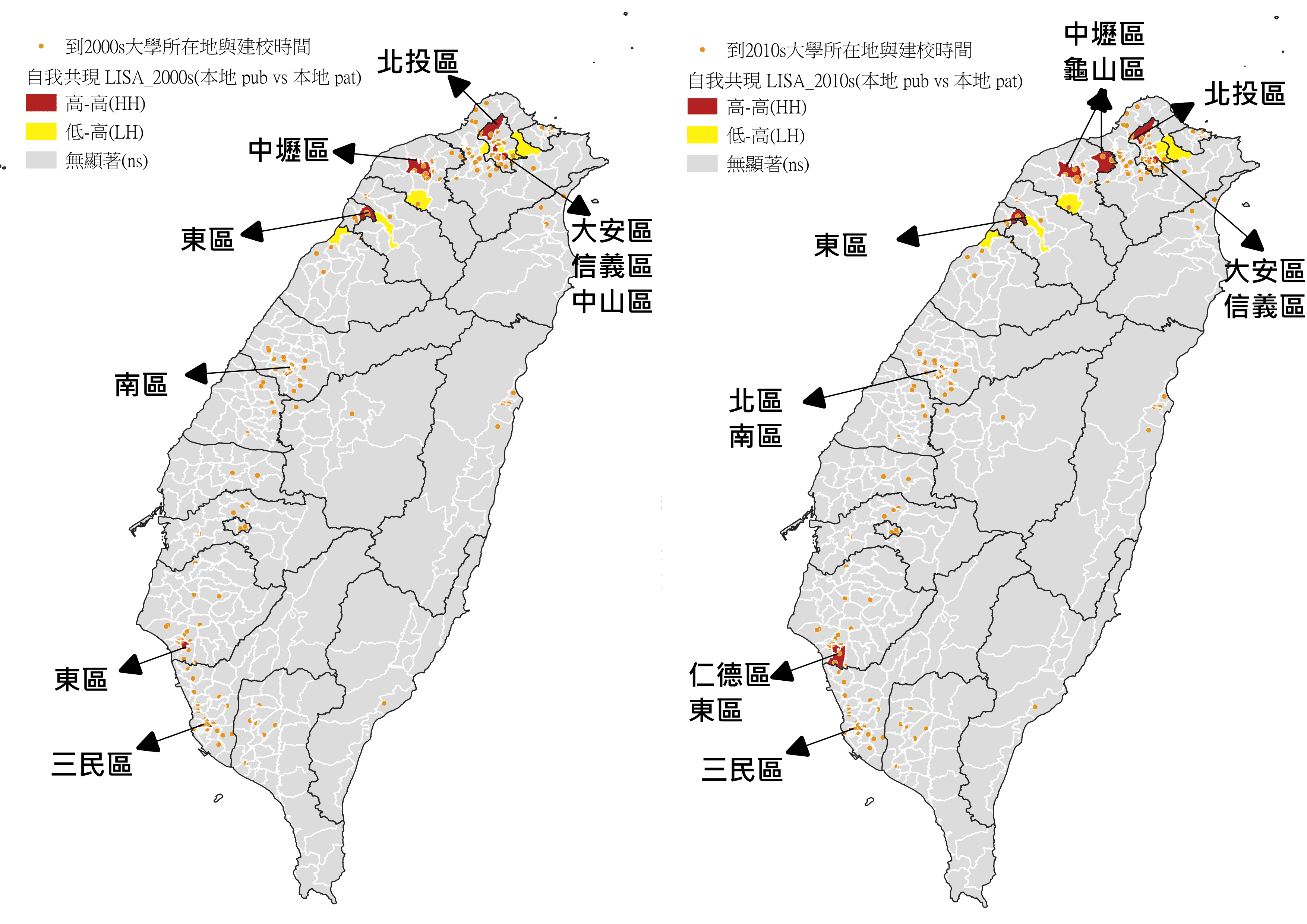
This project examines how academic research and industrial innovation are spatially connected in Taiwan’s biomedical sector from 1980 to 2019. It focuses on whether academic research contributes to local innovation and generates knowledge spillovers across neighboring regions.
Using natural language processing, deep learning, exploratory spatial data analysis, and the Spatial Durbin Model, I analyze the spatial distribution of biomedical research and patent activity. The results show significant spatial clustering in both academic research and industrial innovation, as well as positive local and neighboring spillover effects from academic research to biomedical patenting.
This project provides empirical evidence on the spatial linkages between knowledge production and innovation, with implications for university policy and industry-academia collaboration in Taiwan.
2. Academic Research, Collaboration, and Innovation in Taiwan’s Semiconductor Knowledge Base
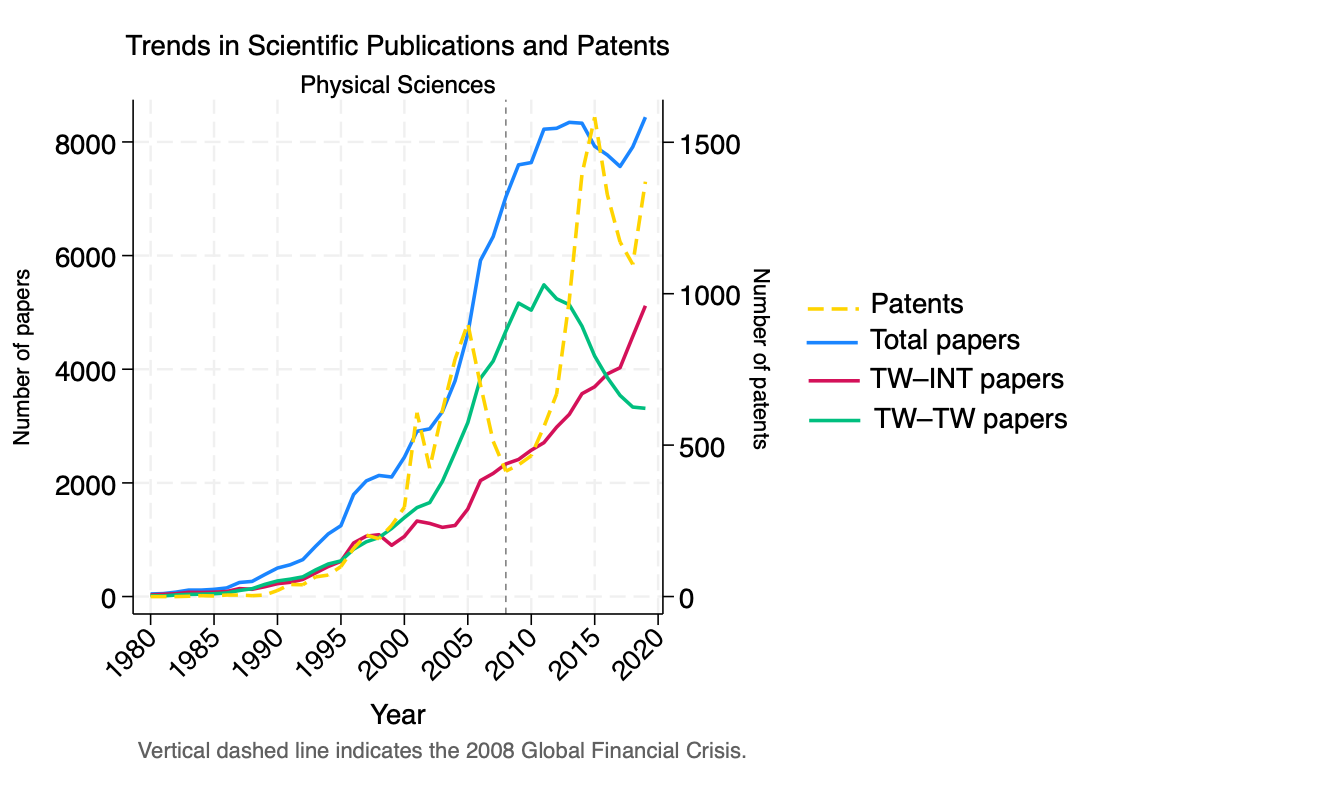
This study examines how academic research, collaboration structures, and innovation co-evolved in Taiwan’s semiconductor-related knowledge base from 1980 to 2019. Using Scopus publications and patent counts, it compares domestic and international research channels as well as different institutional forms of collaboration.
The analysis shows strong two-way dynamics between patenting and internationally embedded research, especially internationally co-authored publications, collaboration intensity, and international university-to-university ties. In contrast, domestically bounded publication output and domestic university collaboration are less strongly connected to patenting. The findings highlight the importance of cross-border knowledge integration in innovation-oriented science policy.